Two full-size panels on a DIY ground mount feed power into your house through an ordinary outdoor outlet — no roof work, no trenching, no crew, and in a growing list of states, no interconnection agreement. The rules differ state by state and they are changing fast, so we built a checker that tells you exactly where yours stands before you buy.
“After 10 years of adoption in Germany, four million of plug-in solar systems are in use with no significant safety incidents reported.”
Testimony to the Vermont House on S.202, dated March 17, 2026, filed under submitter Wesley Schrock and authored by Benjamin Davis, Bill Brooks and Daniel L. Gerber. This is advocacy testimony from people who work in this market, not independent research — we cite it as testimony because that is what it is.
How it works
Three steps, one afternoon
Nothing gets hardwired, nothing gets bolted to your roof, and nothing needs a trench.
01
Set the mount
The ground mount assembles on the dirt and anchors down. No concrete, no roof penetrations, no trenching, no crew.
02
Bolt the panels on
Two 460 W panels bolt to the frame and plug into the microinverter — one panel per MPPT channel, so a shaded panel never drags the other one down.
03
Plug it in
The inverter's 5-meter cord ends in an ordinary 3-prong plug. Into an outdoor GFCI outlet, and the power goes to whatever your house is running.
In most states with plug-in laws: no interconnection agreement, no utility fees. Local permits vary: some states preempt local restrictions (Virginia localities can't ban these, from Jan 1, 2027), others expressly preserve local permitting (Connecticut) — check your state below.
The kit
Backyard plug-in solar kit — 920 W
One SKU, everything in the box except the outlet, and free shipping to the lower 48.
920 W DC / 900 W AC
Backyard Plug-In Solar Kit — 920 W
Ground mount · plug-in · lower-48 free shipping
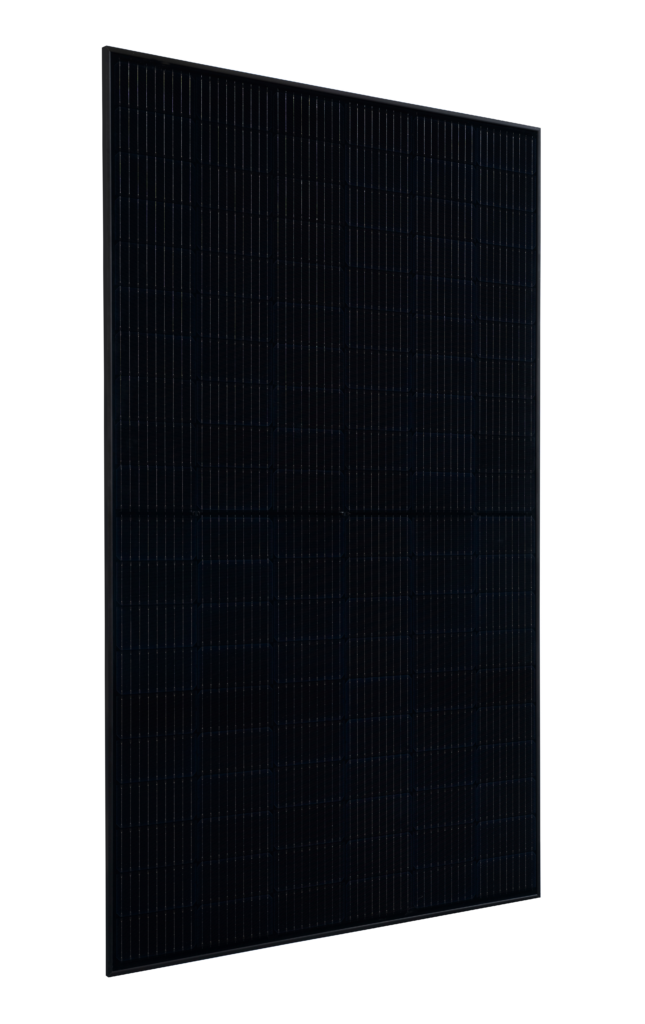
Two full-size 460 W panels and a plug-in microinverter on a DIY ground mount — 920 W DC / 900 W AC into a standard outdoor GFCI outlet. No concrete and no roof work. Free shipping to the lower 48.
What's in the box
2× Aptos 460W monofacial solar panels (920 W total)
APsystems EZ1-LV plug-in microinverter — 900 W, standard 3-prong plug, 5 m cord
DIY ground mount — no concrete required
Cabling and mounting hardware
What's not included
Outdoor GFCI outlet (must already exist)
Batteries (grid-tied only)
Microinverter certified to UL 1741 / UL 1741 SB (IEEE 1547) with built-in anti-islanding.
$1,499
Free shipping · lower 48
Legality
Is it legal in my state?
The honest answer, state by state — including the states where we will not sell you this kit.
As of August 24, 2026: laws in effect in 5 states (UT, CO, MD, ME, VT); 3 more enacted and taking effect by Jan 1, 2027 (CT, NH, VA); 2 passed and awaiting a governor's signature (NY, NJ).
Pick your state and we'll show you exactly what its law says today, what the kit does and doesn't satisfy, and whether we can ship it there.
Every state with a plug-in solar law or a live bill
State
Cap
Effective
Can we ship it?
Law in effect — this kit qualifies
Colorado
1,920 W
In effect since August 12, 2026
Yes — free shipping
Maryland
1,200 W
In effect since July 1, 2026
Yes — free shipping
Utah
1,200 W
In effect since May 7, 2025
Yes — free shipping
Enacted, effective date set — this kit qualifies
Connecticut
1,200 W
Takes effect October 1, 2026
Yes — free shipping
New Hampshire
1,200 W
Takes effect January 1, 2027
Yes — free shipping
Virginia
1,200 W
Takes effect January 1, 2027
Yes — free shipping
Law in effect — requires whole-system certification this kit does not have
Maine
1,200 W
In effect since approximately July 15, 2026
No — certification
Vermont
1,200 W
In effect since July 1, 2026
No — certification
Passed both chambers, awaiting a governor
New Jersey
1,200 W
—
Yes — free shipping
New York
1,200 W
—
Yes — free shipping
Bill still moving
California
1,200 W
—
Yes — free shipping
Massachusetts
Not settled
—
Yes — free shipping
Plug-in solar law is moving fast — verify current rules with your state public utilities commission and your utility before purchasing or installing.
Savings, honestly
What 920 watts actually makes
One worked example, with the inputs shown. Your production depends on your location — sunnier is better.
Example: Albuquerque, NM
≈ 1,820 kWhper year · about 152 kWh a month
Array: 0.92 kW DC (2 × 460 W panels)
Sun hours: Albuquerque plane-of-array table, 4.7–7.6 kWh/m²/day depending on the month
System derate: 0.85 (soiling, wiring, inverter conversion)
Panels facing due south at latitude tilt (the model's assumption)
Math: kW × sun hours × derate × days in each month, summed
That is an Albuquerque number, not a national one. This table is a New Mexico baseline — a cloudier or more northern location makes less, a south-facing unshaded spot makes more, and shade for part of the day costs you more than most people expect.
What those kilowatt-hours are worth is bill offset and nothing else: the system reduces what you buy from your utility while it is producing. We do not publish dollar-savings or break-even figures, because they depend on your rate and your usage, not on the hardware.
Two things not to count on: the federal residential solar tax credit ended for expenditures after December 31, 2025, and every state plug-in law enacted so far excludes these systems from net metering. Connecticut requires a specific consumer warning about what happens to the excess — it is printed on Connecticut's card in the checker above.
Our home state
New Mexico: no plug-in law yet
We are in Albuquerque, so we will be blunt about our own state.
New Mexico: 17.9.568 NMAC requires an interconnection review and agreement for all parallel generation up to 10 MW, with no small-system exemption. There is no plug-in exception in New Mexico today — talk to your utility before you plug anything in.
Senate Bill 157 would have changed that. It would have allowed 1,920 W of plug-in solar on a standard outlet, exempt from interconnection review and from net metering, with the utility barred from requiring even a notification. It was introduced on January 26, 2026 and died in the Senate Committees' Committee without a hearing, testimony, or a vote — 2026 was a 30-day budget session, where a non-budget bill needs the Governor's message to be heard at all. The 2027 session runs January 19 to March 20 with no such restriction. No sponsor has publicly committed to reintroducing it, so we are not going to promise you it comes back.
We will still ship you the kit in New Mexico — that is your call to make with your utility, and the disclosure above is what you need to make it. If you would rather have solar that is permitted, inspected and interconnected the normal way, that is our day job: off-grid solar installs, solar well pumps, and well drilling across New Mexico.
Want to know if New Mexico's rules change?
Questions
Straight answers
Is this kit certified?
Microinverter certified to UL 1741 / UL 1741 SB (IEEE 1547) with built-in anti-islanding. That is the certification we can verify from the manufacturer's published datasheet, and it is the only one we claim. As of August 24, 2026, no complete plug-in kit on the US market — this one included — verifiably holds system-level certification under UL 3700, the outline of investigation that covers a whole plug-in system rather than one component. Maine's and Vermont's laws require that system-level certification, which is why we cannot sell this kit there, and the pending New York and New Jersey laws would require it too.
The microinverter has built-in anti-islanding: when the grid goes down it stops producing almost immediately, so it can never feed a de-energized line that a lineworker might be working on. That also means this is not a backup power system — there is no battery in the kit, and it produces nothing while the grid is out. Utah, Colorado, Connecticut, Vermont, and Virginia all require exactly this shutdown behavior.
Can I use this if I rent?
Mechanically, yes — the mount sits on the ground, the inverter plugs into an existing outdoor GFCI outlet, and the whole thing comes apart to move with you. Legally it depends on your state and your lease. Vermont gives tenants a 10-day landlord-notice path, and from January 1, 2027 Virginia landlords of buildings with four or more units may not prohibit a system on a patio or balcony. Everywhere else, get your landlord's written permission first, and check your state in the state checker on this page.
My state doesn't have a plug-in solar law yet — can I still buy this?
In most states, yes. No state prohibits owning or using one of these systems; where there is no plug-in law, what applies is your utility's standard interconnection tariff and how your local code officials read the NEC. So read your utility's interconnection tariff and talk to them before you plug anything in. We stop checkout in only two situations: where the law itself rules this kit out (Maine and Vermont), and where free shipping cannot reach (Alaska, Hawaii, Puerto Rico). You can also join the waitlist in the state checker and we will email you if your state changes.
The APsystems EZ1-LV microinverter carries a 12-year warranty when you register it in the APsystems app, and 2 years if you do not — so register it the day it arrives. The panels carry the Aptos manufacturer warranty that ships with them. For freight damage, inspect the pallet at delivery and write any damage on the delivery receipt before you sign it — that signature is what a carrier claim turns on.
How does shipping work?
Free shipping to the lower 48. Each panel is roughly 75 × 45 inches and 51 pounds, so the kit ships as LTL freight on a pallet, not as a parcel: expect a call from the carrier to schedule curbside delivery, and plan on a second person to help move the panels. Alaska, Hawaii, and Puerto Rico fall outside free shipping — email nmoffgridsolar@gmail.com and we will quote the freight.
Why full-size panels instead of thin "balcony" panels?
Because in the US, balcony solar is really ground-mount or roof-mount solar — no kit sold here ships with a railing bracket, ours included. Once the panels are going on the ground anyway, full-size ones win: these are the same 460 W panels that go on rooftops, they cost less per watt than the small panels used in kits marketed as balcony solar, and two of them fill the 900 W inverter. The trade is size and weight — about 75 × 45 inches and 51 pounds each — which is why the kit is built around a ground mount.
 920 W DC / 900 W AC